- Sediroglu Group
- 10 August 2026
Wheat Cleaning Machine
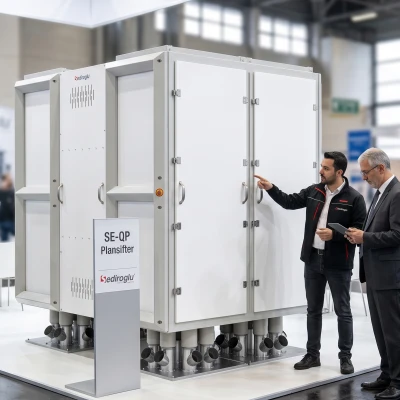
A Wheat Cleaning Machine is an essential piece of equipment used in modern grain processing facilities to remove unwanted materials and impurities from wheat. During harvesting, transportation, and storage, wheat can become mixed with dust, stones, straw, chaff, seeds, metal particles, and other foreign materials. Effective cleaning is therefore an important step before milling, grinding, or further processing.
Modern wheat cleaning machines are designed to improve grain quality, protect processing equipment, and increase the efficiency of grain processing operations. Depending on the processing line, different cleaning technologies can be combined to achieve a high level of wheat purity.
What Is a Wheat Cleaning Machine?
A Wheat Cleaning Machine is industrial equipment designed to separate impurities from wheat before the grain enters the milling or processing stage. The machine uses mechanical and physical separation principles to identify and remove materials that differ from wheat in terms of size, weight, shape, density, and aerodynamic properties.
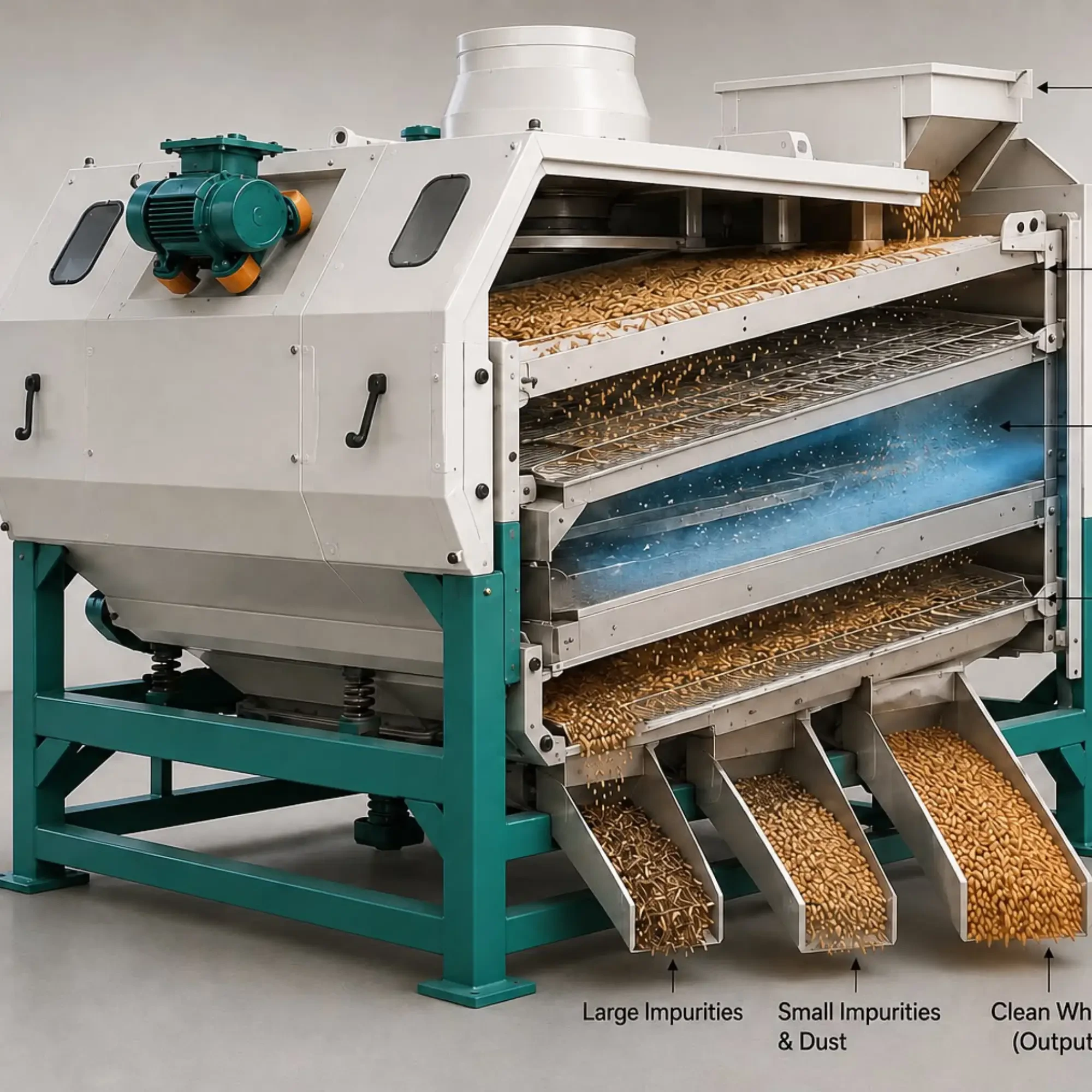
The cleaning process can include several stages. Sieving can remove larger and smaller particles, while aspiration systems can separate lightweight materials such as dust, husks, and chaff. Additional equipment can be used to remove stones, metal particles, and other difficult impurities.
By improving the cleanliness of wheat before processing, a grain cleaning system contributes to better flour quality and more consistent production.
Why Is Wheat Cleaning Important?
Cleaning wheat is one of the most important stages in grain processing. Unclean wheat can negatively affect the entire milling process and the quality of the final product.
Wheat may contain a wide range of impurities, including:
-
Dust and dirt
-
Stones and small rocks
-
Straw and chaff
-
Weed seeds
-
Broken grains
-
Husk particles
-
Metal fragments
-
Insects and foreign materials
-
Oversized and undersized particles
Removing these materials before milling provides several advantages.
First, clean wheat helps protect expensive milling equipment from damage. Stones and metal particles can cause serious mechanical problems if they enter the processing line.
Second, effective cleaning improves the quality of the finished flour. Foreign materials can affect the color, taste, hygiene, and overall consistency of flour.
Finally, a well-designed cleaning process improves production efficiency by allowing downstream equipment to operate with cleaner and more uniform raw material.
How Does a Wheat Cleaning Machine Work?
The exact working principle depends on the type of cleaning machine and the configuration of the processing line. However, most systems use a combination of screening, aspiration, density separation, and other mechanical processes.
1. Feeding
The wheat enters the cleaning system through a controlled feeding mechanism. Consistent feeding is important because excessive or irregular material flow can reduce cleaning efficiency.
2. Screening
The wheat passes through screens or sieves with specific openings. Different particle sizes are separated during this stage.
Large impurities such as straw, sticks, and large pieces of foreign material can be removed, while smaller particles and fine impurities can be separated through appropriate screening surfaces.
3. Aspiration
An aspiration system uses controlled airflow to separate lightweight materials from heavier wheat kernels.
Dust, husks, chaff, and other lightweight materials can be carried away by the airflow, while the heavier wheat continues through the processing line.
4. Stone Separation
Depending on the system configuration, a destoner can be used to remove stones and other high-density materials.
This stage is particularly important because stones can damage rollers, grinders, and other milling components.
5. Additional Separation
For advanced grain processing applications, additional cleaning technologies may be included. Magnetic separators can help remove ferrous metal particles, while specialized separators can distinguish materials based on shape, size, or density.
Main Types of Wheat Cleaning Equipment
A complete wheat cleaning line may include several different machines. Each machine performs a specific function.
Grain Pre-Cleaner
A grain pre-cleaner is commonly used at the beginning of the cleaning process. It removes large impurities and prepares the wheat for further cleaning.
Pre-cleaning can reduce the workload on downstream equipment and improve the overall efficiency of the processing line.
Vibrating Separator
A vibrating separator uses vibration and screen surfaces to separate particles according to size.
It can remove large and small impurities while allowing wheat kernels to continue through the appropriate outlet.
Air Aspirator
An air aspirator separates lightweight materials using airflow. It is particularly effective for removing dust, chaff, husks, and other low-density particles.
Destoner
A destoner is designed to remove stones and other heavy materials from wheat.
Because stones can have a similar size to wheat kernels, density and airflow are often used to achieve effective separation.
Magnetic Separator
A magnetic separator removes ferrous metal particles from the grain stream. This equipment can provide an additional layer of protection for processing machinery.
Gravity Separator
A gravity separator uses differences in density to separate high-quality wheat from lighter, damaged, or undesirable kernels.
It can be useful when grain quality needs to be improved beyond basic impurity removal.
Benefits of Using a Wheat Cleaning Machine
Investing in an efficient wheat cleaning system can provide several benefits for flour mills, grain processors, agricultural facilities, and other grain-related businesses.
Improved Wheat Quality
The primary advantage is improved grain cleanliness. Removing unwanted materials creates a cleaner raw material for milling and processing.
Better Flour Quality
Cleaner wheat can contribute to more consistent flour production. Removing impurities before milling helps processors maintain desired quality standards.
Equipment Protection
Stones, metal particles, and other hard foreign materials can damage processing equipment. Effective cleaning reduces this risk and can help extend equipment service life.
Higher Processing Efficiency
A properly designed cleaning system can improve the efficiency of the entire production line. Removing impurities early prevents unwanted materials from reaching downstream machinery.
Reduced Maintenance
When processing equipment receives cleaner raw material, there can be less contamination and mechanical stress. This may reduce maintenance requirements and unexpected downtime.
Improved Food Safety
Food processing facilities must maintain high standards of hygiene and product quality. Effective grain cleaning helps reduce unwanted foreign materials before the wheat enters the production process.
Wheat Cleaning Machine for Flour Mills
Flour mills depend on effective wheat cleaning to produce consistent flour. Before wheat reaches the milling section, it normally passes through several cleaning stages.
The cleaning process can be adjusted according to wheat variety, raw material quality, production capacity, and the type of final product.
A modern flour mill may combine pre-cleaning, screening, aspiration, destoning, magnetic separation, and other technologies into a complete wheat cleaning line.
The objective is not simply to remove visible impurities. The system should also prepare the wheat for efficient milling while minimizing the loss of usable grain.
Factors to Consider When Choosing a Wheat Cleaning Machine
Selecting the right machine requires careful consideration of several technical factors.
Processing Capacity
Capacity is one of the most important considerations. The machine should be capable of handling the required amount of wheat per hour without compromising cleaning performance.
Type of Impurities
Different wheat sources may contain different types of impurities. A facility with a high level of stones may require stronger destoning capabilities, while dusty or straw-heavy wheat may require effective aspiration and screening.
Cleaning Efficiency
Cleaning efficiency should be evaluated according to the machine's ability to remove unwanted materials while minimizing good grain losses.
Machine Construction
Industrial grain cleaning equipment should be constructed from durable materials and designed for continuous operation.
Easy access to components is also important for inspection, cleaning, and maintenance.
Maintenance Requirements
Simple maintenance procedures can reduce downtime and operating costs. Machines should provide convenient access to screens, filters, bearings, and other components that require regular inspection.
Integration With Existing Systems
The cleaning machine should be compatible with the existing grain processing line. Considerations may include feeding systems, elevators, conveyors, aspiration systems, and downstream milling equipment.
Applications of Wheat Cleaning Machines
Wheat cleaning machines are used in a wide range of agricultural and industrial applications.
Common applications include:
-
Flour mills
-
Grain processing plants
-
Agricultural facilities
-
Grain storage facilities
-
Cereal processing plants
-
Feed processing facilities
-
Seed cleaning operations
-
Commercial grain handling systems
The machine configuration can be customized according to the requirements of each facility.
Wheat Cleaning and Grain Processing Efficiency
Efficient wheat cleaning can have a direct impact on the performance of a grain processing plant. When impurities are removed before milling, downstream equipment can work with a cleaner and more consistent raw material.
This can improve process stability and help operators maintain consistent production conditions.
A well-designed cleaning line also helps optimize material flow. Different machines can be arranged in sequence so that each stage removes a particular category of impurities.
This approach allows processors to achieve effective cleaning without unnecessarily removing valuable wheat.
Maintenance of Wheat Cleaning Equipment
Regular maintenance is essential for maintaining consistent cleaning performance.
Operators should regularly inspect screens, filters, bearings, aspiration components, and other moving parts. Dust and accumulated material should be removed according to the manufacturer's maintenance recommendations.
Screens should also be checked for damage or blockage. A damaged or blocked screen can reduce separation efficiency and affect the overall performance of the system.
Regular maintenance can help identify problems early and reduce unexpected production interruptions.
The Future of Wheat Cleaning Technology
Grain processing technology continues to develop as processors look for higher efficiency, improved automation, and better product quality.
Modern wheat cleaning systems can be integrated with automated control systems that monitor material flow and machine performance. Advanced sensors and control technologies can help operators optimize cleaning parameters according to changing raw material conditions.
Energy efficiency is also becoming increasingly important. Manufacturers are developing equipment that can deliver effective separation while optimizing power and airflow requirements.
The combination of automation, improved separation technology, and intelligent process control is expected to make future wheat cleaning systems more efficient and adaptable.
Conclusion
A Wheat Cleaning Machine plays a vital role in modern grain processing. By removing dust, stones, straw, chaff, weed seeds, metal particles, and other unwanted materials, it prepares wheat for efficient and reliable processing.
An effective wheat cleaning system can improve grain quality, protect machinery, reduce maintenance requirements, and contribute to consistent flour production.
When choosing a wheat cleaning machine, processors should consider factors such as capacity, impurity type, cleaning efficiency, machine construction, maintenance requirements, and compatibility with the existing production line.
For flour mills and grain processing facilities, investing in the right cleaning technology is an important step toward achieving cleaner raw materials, efficient production, and high-quality finished products.
Frequently Asked Questions About Industrial Flour and Feed Milling Technologies
"At Sediroglu Group, we provide turnkey solutions including flour and feed mill equipment, conveying section equipment, grinding section equipment, and packaging section equipment. We have compiled the most frequently asked questions about our high-efficiency solutions, technical details, and capacity options tailored to your facility. If you have any further questions or require technical consultancy for your project, please contact our expert team."
A Wheat Cleaning Machine removes dust, stones, straw, chaff, seeds, and other impurities from wheat before milling or further processing.
Wheat cleaning improves grain quality, protects processing equipment, reduces contamination, and helps produce cleaner and more consistent flour.
It typically uses screening, aspiration, airflow, density separation, and other methods to separate wheat from unwanted materials.
They are commonly used in flour mills, grain processing plants, agricultural facilities, grain storage systems, and cereal processing facilities.
Consider factors such as processing capacity, wheat quality, types of impurities, cleaning efficiency, maintenance requirements, and compatibility with your existing production line.
Blog Latest Posts
Flour Mill Grinder
Mill Grains | Grain Milling Machines & Processing Solutions