- Sediroglu Group
- 27 June 2026
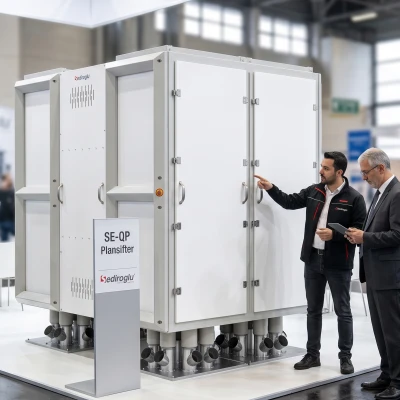
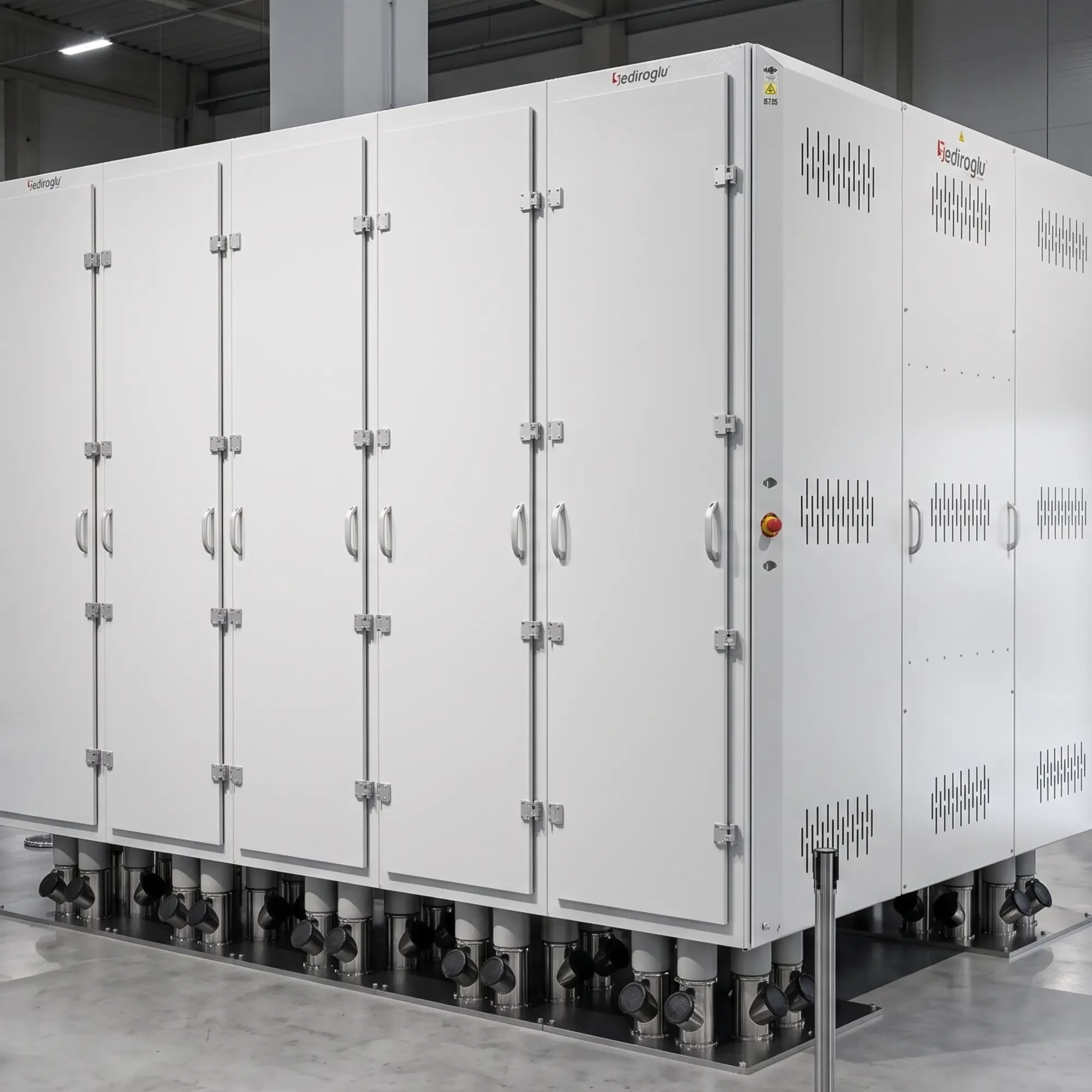
Quadro Plansifter
A Quadro Plansifter is a high-performance sieving machine used in flour milling and grain processing industries. It is designed to separate and classify granular materials such as wheat flour, semolina, bran, and other milling products based on particle size. The system uses a series of stacked sieve frames that move in a circular or gyratory motion, ensuring efficient and precise separation.
Unlike basic sifters, the Quadro Plansifter offers multi-channel screening, which allows simultaneous processing of different product grades. This makes it an essential machine in modern industrial flour mills where consistency and high output are required.
2. How does a Quadro Plansifter work?
The working principle of a Quadro Plansifter is based on gyratory motion combined with gravity. The product is fed into the machine and distributed evenly across multiple sieve layers. Each sieve frame contains different mesh sizes, allowing particles to be separated according to size.
As the machine operates, finer particles pass through the mesh while larger particles remain on the surface and are directed to different outlets. The circular movement ensures continuous product flow, preventing clogging and improving efficiency.
This system allows precise separation in multiple fractions in a single pass.
3. Where is Quadro Plansifter used?
Quadro Plansifters are widely used in:
-
Flour milling plants
-
Semolina and durum wheat processing
-
Maize and corn milling
-
Feed production facilities
-
Food processing industries
-
Grain cleaning and classification systems
They are especially critical in large-scale industrial mills where consistent product quality and high throughput are required.
4. What are the main advantages of a Quadro Plansifter?
The Quadro Plansifter offers several advantages:
-
High sifting efficiency
-
Multi-grade product separation
-
Low energy consumption
-
Stable and continuous operation
-
Reduced product loss
-
Minimal maintenance requirements
-
Long operational lifespan
Its design ensures that even high-capacity production lines can maintain accuracy without sacrificing speed or quality.
5. What materials can be processed in a Quadro Plansifter?
A Quadro Plansifter is suitable for a wide range of granular and powdered materials, including:
-
Wheat flour
-
Semolina
-
Bran
-
Corn flour
-
Rice flour
-
Starch-based powders
-
Animal feed ingredients
Its flexible design allows it to be adapted for different industries beyond flour milling, including chemical and food processing sectors.
6. How many sieve frames does a Quadro Plansifter have?
The number of sieve frames varies depending on the model and capacity requirements. Typically, a Quadro Plansifter can include multiple stacks of sieve compartments, each divided into sections for different particle sizes.
Industrial models may contain:
-
4 to 8 sieve sections per compartment
-
Multiple compartments within a single machine
-
Modular configurations for customization
This flexibility allows mill operators to design the system based on production needs.
7. What is the difference between a Quadro Plansifter and a standard sifter?
A standard sifter usually handles a single or limited separation process, while a Quadro Plansifter is designed for advanced, multi-stage separation.
Key differences include:
-
Capacity: Quadro Plansifter handles larger volumes
-
Efficiency: Higher precision separation
-
Structure: Multi-deck modular design
-
Performance: Continuous and stable operation
-
Application: Industrial-scale production
In summary, Quadro Plansifter is built for modern high-capacity milling systems, while standard sifters are more suitable for small-scale operations.
8. How is product quality improved with a Quadro Plansifter?
Product quality is significantly improved because the machine ensures uniform particle size distribution. By separating impurities and unwanted coarse particles, the final flour or grain product becomes more refined.
Consistent sifting also helps:
-
Improve baking performance of flour
-
Increase product shelf life
-
Ensure compliance with industry standards
-
Reduce contamination risks
This makes it essential for premium flour production.
9. What maintenance does a Quadro Plansifter require?
Although the machine is designed for durability, regular maintenance is necessary for optimal performance:
-
Cleaning sieve frames regularly
-
Checking mesh tension
-
Inspecting vibration components
-
Lubricating moving parts
-
Monitoring motor performance
Routine maintenance helps prevent downtime and extends the machine’s lifespan.
10. Is Quadro Plansifter energy efficient?
Yes, the Quadro Plansifter is designed to be energy efficient. Its optimized motion system reduces unnecessary power consumption while maintaining high throughput.
Energy efficiency is achieved through:
-
Balanced gyratory movement
-
Low-friction components
-
Optimized motor systems
-
Reduced mechanical resistance
This makes it suitable for continuous 24/7 industrial operation.
11. Can Quadro Plansifter be customized?
Yes, most Quadro Plansifters are modular and can be customized according to production needs. Customization options include:
-
Number of sieve layers
-
Mesh size selection
-
Capacity adjustments
-
Material type compatibility
-
Discharge outlet configuration
This flexibility allows it to integrate into different milling systems easily.
12. What industries benefit most from Quadro Plansifter?
The primary industries include:
-
Flour milling industry
-
Grain processing industry
-
Food manufacturing
-
Feed production industry
-
Agricultural processing plants
Any industry requiring precise particle classification can benefit from this system.
13. How long does a Quadro Plansifter last?
With proper maintenance, a Quadro Plansifter can last many years, often over a decade in industrial environments. Durability depends on:
-
Usage intensity
-
Maintenance schedule
-
Material processed
-
Operating conditions
High-quality models are built with durable steel structures and wear-resistant components to ensure long service life.
14. What are common problems in Quadro Plansifter operation?
Some common issues include:
-
Clogged sieve meshes
-
Uneven material distribution
-
Vibrational imbalance
-
Reduced separation efficiency
-
Wear of sieve cloth
Most of these issues can be prevented with regular cleaning and proper maintenance.
15. Why is Quadro Plansifter important in modern milling systems?
Modern milling systems require precision, speed, and consistency. The Quadro Plansifter plays a key role by ensuring that flour and grain products meet strict quality standards.
It improves:
-
Production efficiency
-
Product consistency
-
Process automation
-
Overall mill performance
Without efficient sifting, milling quality would be inconsistent and inefficient.
Conclusion
The Quadro Plansifter is a critical machine in modern flour milling and grain processing industries. Its advanced multi-deck design, high efficiency, and reliable performance make it essential for achieving consistent product quality. Whether used in large-scale industrial mills or specialized food production facilities, it ensures precise separation and optimal processing results.
Frequently Asked Questions About Industrial Flour and Feed Milling Technologies
"At Sediroglu Group, we provide turnkey solutions including flour and feed mill equipment, conveying section equipment, grinding section equipment, and packaging section equipment. We have compiled the most frequently asked questions about our high-efficiency solutions, technical details, and capacity options tailored to your facility. If you have any further questions or require technical consultancy for your project, please contact our expert team."
A Quadro Plansifter is an industrial sifting and classification machine used primarily in flour mills and grain processing plants. It separates flour, semolina, bran, middlings, and other milled products into different fractions according to particle size. Multiple sieve compartments allow several sifting operations to be performed simultaneously, making the machine particularly suitable for high-capacity milling systems.
A Quadro Plansifter uses controlled gyratory motion to distribute milled material across multiple stacked sieve frames. Each sieve is fitted with a selected mesh size. Fine particles pass through the sieve openings while larger particles remain above the mesh and are directed toward separate outlets. This multi-stage process enables several product fractions to be classified during continuous operation.
In a flour mill, a Quadro Plansifter is used to classify and separate products produced during the milling process. It can separate flour, semolina, bran, middlings, and other intermediate products according to particle size. Accurate sifting helps maintain consistent flour specifications and allows different fractions to be directed to the appropriate stages of the milling process.
A Quadro Plansifter can process wheat flour, semolina, bran, corn flour, rice flour, starch-based powders, milled grain products, and selected feed ingredients. The appropriate sieve configuration depends on the material characteristics, required separation accuracy, production capacity, and desired final product specifications.
The main difference is the number of simultaneous separation operations and the production capacity. A standard sifter may perform a relatively simple classification process, while a Quadro Plansifter uses multiple sieve compartments and decks to separate several product fractions simultaneously. This makes it better suited to industrial flour mills requiring high throughput and precise product classification.
Selecting the right Quadro Plansifter requires evaluating mill capacity, number of required product fractions, available installation space, sieve surface area, number of compartments, sieve configuration, inlet and outlet requirements, and the characteristics of the material being processed. The plansifter should be selected as part of the complete milling flow rather than according to machine size alone.
The required capacity depends on the mill's hourly throughput, product type, number of separations, sieve area, mesh configuration, moisture characteristics, and milling diagram. A higher-capacity flour mill generally requires greater effective sifting area and an appropriate number of sieve compartments. Capacity should therefore be calculated according to the actual process flow rather than a single nominal figure.
Sieve mesh size directly affects separation accuracy and product classification. Finer mesh openings allow smaller particles to pass through while retaining larger particles, whereas larger openings produce a coarser separation. Using the correct mesh configuration is essential for achieving the required flour quality, maintaining capacity, and preventing unnecessary recirculation within the milling process.
The required number of sieve compartments depends on mill capacity, milling diagram, number of product streams, and the number of classifications required. Different configurations can be used to process multiple flour and semolina fractions simultaneously. For this reason, compartment quantity should be determined according to the specific production process rather than selected as a fixed number for every mill.
The principal advantages include high sifting efficiency, precise particle classification, simultaneous separation of multiple product streams, high processing capacity, stable continuous operation, flexible sieve configurations, and efficient use of available sifting area. These characteristics make the Quadro Plansifter particularly valuable in modern industrial flour milling plants.
Reduced sifting efficiency can be caused by clogged or damaged sieve cloths, incorrect mesh selection, uneven product distribution, excessive feed rate, abnormal machine movement, unsuitable product moisture, worn cleaning components, or incorrect sieve configuration. Identifying the actual cause is important because changing the mesh alone may not solve a process-related sifting problem.
Sieve clogging can be reduced through regular cleaning, correct mesh selection, proper product distribution, suitable sieve-cleaning components, controlled feed rates, and appropriate product moisture. Sieve cloth condition should also be inspected regularly. Persistent clogging may indicate that the selected sieve configuration or upstream milling conditions need adjustment.
Routine maintenance includes inspecting and cleaning sieve frames, checking sieve cloth tension and condition, monitoring drive and suspension components, inspecting product channels and outlets, checking moving parts, and monitoring abnormal vibration or noise. Preventive maintenance helps preserve separation accuracy, reduce unplanned downtime, and extend the operating life of the machine.
Before purchasing a Quadro Plansifter, consider required hourly capacity, number of compartments, total sifting area, sieve configuration, materials to be processed, required product fractions, installation dimensions, energy consumption, cleaning accessibility, maintenance requirements, spare parts availability, and compatibility with the existing milling flow. The best configuration is the one designed around the actual production process and future capacity requirements.
Blog Latest Posts
Flour Mill Grinder

Mill Grains | Grain Milling Machines & Processing Solutions