- Sediroglu Group
- 01 August 2026
Flour Silo
Flour silo is one of the most important storage systems in the flour milling industry. It provides a safe, hygienic, and efficient environment for storing flour before packaging, transportation, or further processing. Modern flour silos help manufacturers maintain product quality, reduce waste, and automate production processes.
As flour production continues to increase worldwide, milling companies require storage solutions that protect flour from moisture, contamination, insects, and environmental factors. A properly designed flour silo ensures continuous production while minimizing operational costs.
Whether used in small milling facilities or large industrial flour plants, flour silos play a vital role in maintaining product consistency and improving overall plant efficiency.
What Is a Flour Silo?
A flour silo is a specialized storage container designed specifically for storing finished flour under controlled conditions. Unlike grain silos, flour silos are engineered to handle fine powder materials that require special discharge systems and hygienic construction.
Most flour silos are manufactured from:
-
Galvanized steel
-
Stainless steel
-
Carbon steel with food-grade coating
The stored flour is transferred pneumatically or mechanically into the silo and discharged through conveyors or screw feeders when needed.
Modern flour silos often include automation systems that monitor:
-
Filling level
-
Temperature
-
Pressure
-
Airflow
-
Product movement
These features help maintain optimal storage conditions while ensuring continuous production.
Why Flour Storage Matters
Proper flour storage directly affects product quality and food safety.
Poor storage conditions may cause:
-
Moisture absorption
-
Flour caking
-
Mold formation
-
Bacterial contamination
-
Insect infestation
-
Product loss
Using a professionally designed flour silo minimizes these risks and ensures the flour remains suitable for commercial use.
Types of Flour Silos
Different milling facilities require different storage solutions.
Indoor Flour Silos
Indoor silos are installed inside flour mills where environmental conditions are easier to control.
Advantages include:
-
Better hygiene
-
Easy maintenance
-
Protection from weather
-
Stable temperatures
Outdoor Flour Silos
Outdoor silos are used when additional storage capacity is required.
They are designed to withstand:
-
Rain
-
Wind
-
UV exposure
-
Temperature changes
Protective coatings help prevent corrosion and increase service life.
Stainless Steel Flour Silos
These silos are preferred for food production facilities with strict hygiene requirements.
Benefits include:
-
Corrosion resistance
-
Easy cleaning
-
Long lifespan
-
Food safety compliance
Modular Flour Silos
Modular systems allow businesses to increase storage capacity as production grows.
Advantages include:
-
Easy transportation
-
Fast installation
-
Expandable capacity
-
Lower construction costs
Main Components of a Flour Silo
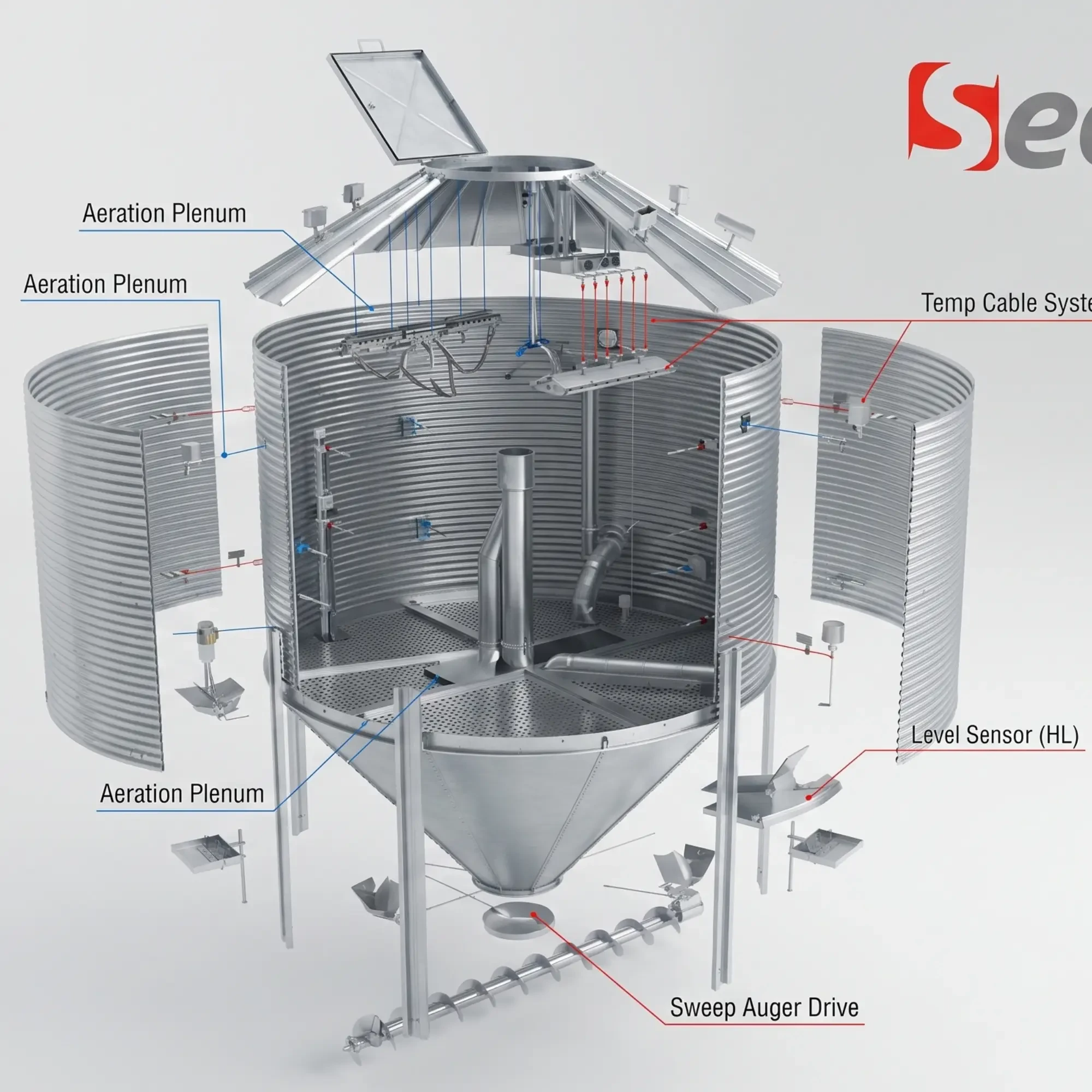
A complete flour silo system consists of several important components.
Silo Body
The main storage chamber where flour is kept safely.
Cone Bottom
Allows smooth discharge of flour using gravity.
Aeration System
Prevents flour from compacting and improves material flow.
Level Sensors
Monitor storage levels and prevent overfilling.
Dust Collection System
Maintains a clean working environment while reducing airborne flour particles.
Pressure Relief Valve
Protects the silo from excessive internal pressure.
Inspection Hatch
Provides easy access for cleaning and maintenance.
Loading and Unloading Equipment
Transfers flour efficiently between processing equipment and packaging lines.
Benefits of Using a Flour Silo
Improved Product Quality
Proper storage helps preserve:
-
Texture
-
Color
-
Freshness
-
Baking performance
This results in consistent product quality for customers.
Higher Production Efficiency
Automated flour storage reduces manual handling and speeds up production.
Continuous material flow ensures mills operate without unnecessary interruptions.
Better Hygiene
Food-grade silos reduce contamination risks and support international food safety standards.
Clean storage environments also simplify quality inspections.
Reduced Product Loss
Modern discharge systems minimize leftover flour inside the silo.
This reduces waste and increases profitability.
Lower Labor Costs
Automation significantly decreases the need for manual material handling.
Employees can focus on quality control and production management instead of transporting flour.
Increased Storage Capacity
Large-capacity flour silos allow mills to purchase raw materials in bulk while maintaining sufficient production inventory.
Applications of Flour Silos
Flour silos are used in many industries.
Common applications include:
-
Flour milling plants
-
Food processing factories
-
Bakery production facilities
-
Pasta manufacturers
-
Biscuit factories
-
Cake production
-
Premix manufacturers
-
Animal feed facilities
-
Grain processing plants
Flour Silo Capacity Options
Flour silos are available in various capacities depending on production needs.
Typical capacities include:
-
10 tons
-
20 tons
-
50 tons
-
100 tons
-
250 tons
-
500 tons
-
1,000 tons
-
Custom-designed solutions
Selecting the right capacity depends on production volume, available space, and future expansion plans.
Automation in Modern Flour Silos
Today's flour silos are integrated with advanced automation technologies.
These may include:
-
PLC control systems
-
SCADA monitoring
-
Remote access
-
Automatic filling
-
Automatic discharge
-
Inventory management
-
Digital level measurement
-
Alarm systems
Automation improves efficiency while reducing operational errors.
Maintenance of Flour Silos
Routine maintenance extends equipment life and ensures safe operation.
Maintenance tasks include:
-
Cleaning internal surfaces
-
Inspecting discharge equipment
-
Checking sensors
-
Testing safety valves
-
Inspecting structural components
-
Lubricating moving parts
-
Monitoring corrosion
-
Verifying automation systems
Preventive maintenance minimizes downtime and repair costs.
Safety Considerations
Because flour dust can become combustible under certain conditions, safety is a critical aspect of silo design.
Important safety measures include:
-
Explosion vent panels
-
Dust collection systems
-
Proper grounding
-
Pressure relief valves
-
Fire protection systems
-
Regular inspections
-
Employee training
Following international safety standards helps protect personnel and equipment.
How to Choose the Right Flour Silo
When selecting a flour silo, consider:
-
Storage capacity
-
Material quality
-
Food-grade compliance
-
Available installation space
-
Automation level
-
Maintenance requirements
-
Climate conditions
-
Expansion possibilities
-
Energy efficiency
-
Manufacturer experience
A well-designed silo should meet both current production needs and future growth plans.
Future Trends in Flour Storage
The flour milling industry is increasingly adopting smart technologies.
Emerging trends include:
-
IoT-enabled monitoring
-
AI-supported inventory management
-
Predictive maintenance
-
Energy-efficient aeration systems
-
Sustainable construction materials
-
Cloud-based production management
-
Fully automated storage facilities
These innovations improve efficiency, reduce operating costs, and enhance food safety.
Conclusion
A flour silo is an essential investment for modern flour milling operations. It ensures hygienic storage, protects product quality, reduces waste, and supports continuous production. Whether installed in a small flour mill or a large industrial facility, a properly designed silo increases operational efficiency while helping businesses comply with food safety standards.
By selecting the appropriate capacity, construction material, and automation level, manufacturers can build a reliable storage system that supports long-term productivity and future expansion.
Frequently Asked Questions (FAQs)
1. What is the purpose of a flour silo?
A flour silo safely stores flour while protecting it from moisture, contamination, and product loss.
2. What material is best for a flour silo?
Stainless steel is ideal for maximum hygiene, while galvanized steel offers a durable and cost-effective solution.
3. Can flour silos be fully automated?
Yes. Modern flour silos can include PLC controls, level sensors, remote monitoring, and automated filling and discharge systems.
4. How often should a flour silo be cleaned?
Cleaning frequency depends on production volume, but regular inspections and scheduled maintenance are recommended to maintain food safety.
5. Which industries use flour silos?
Flour silos are widely used in flour mills, bakeries, pasta factories, biscuit manufacturers, food processing plants, and feed production facilities.
Blog Latest Posts
Flour Mill Grinder

Mill Grains | Grain Milling Machines & Processing Solutions