- Sediroglu Group
- 07 July 2026
Feed Hammer Mill
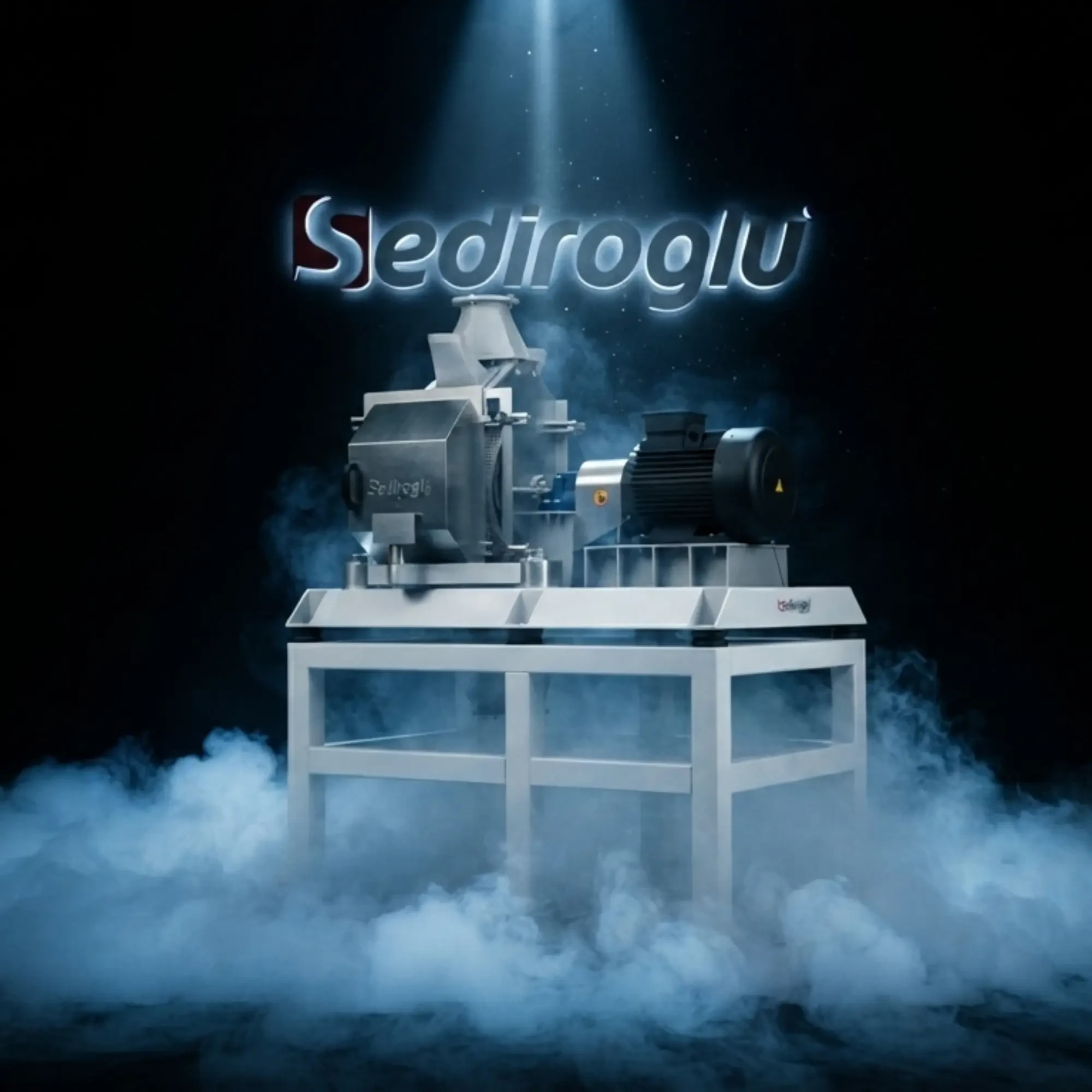
Feed Hammer Mill is one of the most important machines used in the animal feed processing industry. It is designed to grind various grains, cereals and feed ingredients into uniform particle sizes, ensuring consistent feed quality and improved nutritional value. Whether in small feed mills or large-scale industrial production plants, a Feed Hammer Mill plays a crucial role in producing high-quality feed efficiently.
Modern livestock farming demands balanced and uniformly processed feed to improve animal health and maximize productivity. A Feed Hammer Mill helps achieve this by reducing raw materials into the desired particle size while maintaining high production efficiency. Its versatility, reliability and ease of operation make it an indispensable machine in feed manufacturing facilities worldwide.
What Is a Feed Hammer Mill?
A Feed Hammer Mill is a grinding machine that uses high-speed rotating hammers to crush and pulverize feed materials. The machine processes ingredients such as corn, wheat, barley, soybeans, rice and other grains into fine particles suitable for animal feed production.
Unlike conventional grinding equipment, a Feed Hammer Mill offers rapid processing, adjustable particle size and high production capacity. It is suitable for producing feed for poultry, cattle, pigs, sheep, fish and other livestock.
How Does a Feed Hammer Mill Work?
The working principle of a Feed Hammer Mill is simple yet highly effective.
-
Raw materials are fed into the grinding chamber.
-
A high-speed rotor equipped with swinging hammers rotates rapidly.
-
The hammers repeatedly strike the materials.
-
Materials are broken down into smaller particles.
-
Ground material passes through a perforated screen.
-
The finished product exits the machine for further processing.
Different screen sizes can be installed to achieve various particle sizes depending on production requirements.
Main Components
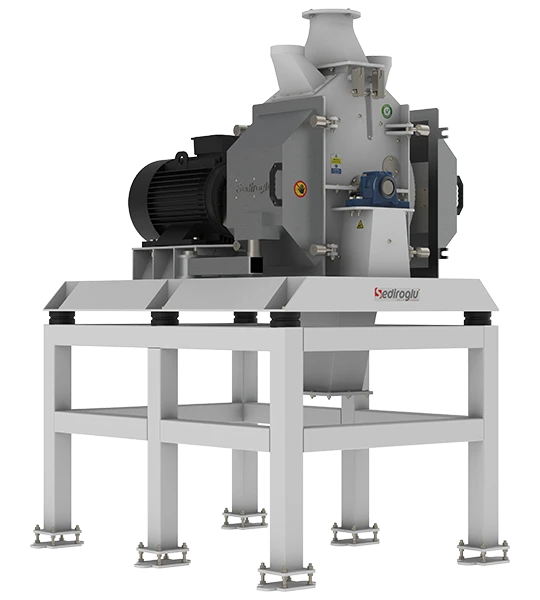
A typical Feed Hammer Mill consists of several key components.
Feeding System
Provides continuous and controlled feeding of raw materials.
Grinding Chamber
The area where the grinding process takes place.
Rotor
Drives the swinging hammers at high speed.
Hammers
Crush and grind feed ingredients through repeated impact.
Screen
Controls the final particle size by allowing only properly ground material to pass through.
Motor
Supplies the power required for efficient grinding.
Bearings
Support smooth and reliable machine operation.
Discharge Outlet
Transfers the finished product to the next production stage.
Advantages of Using a Feed Hammer Mill
High Grinding Efficiency
Processes large quantities of raw materials quickly.
Uniform Particle Size
Produces consistent feed quality.
Versatile Material Processing
Suitable for various grains and feed ingredients.
High Production Capacity
Ideal for both medium and large-scale feed plants.
Low Operating Cost
Efficient energy consumption helps reduce production expenses.
Easy Maintenance
Simple structure allows convenient inspection and servicing.
Durable Construction
Manufactured with wear-resistant materials for long service life.
Continuous Operation
Supports uninterrupted production processes.
Applications
Feed Hammer Mills are widely used in:
-
Animal feed factories
-
Poultry feed production
-
Livestock feed manufacturing
-
Aquaculture feed plants
-
Grain processing facilities
-
Agricultural industries
-
Feed mixing plants
-
Biomass grinding operations
Materials Processed
A Feed Hammer Mill can process numerous raw materials, including:
-
Corn
-
Wheat
-
Barley
-
Oats
-
Rice
-
Soybeans
-
Sorghum
-
Peas
-
Sunflower meal
-
Cottonseed meal
-
Bran
-
Various feed additives
Its flexibility makes it suitable for diverse feed formulations.
Importance in Feed Production
Particle size directly affects feed digestibility and animal performance.
Proper grinding provides:
-
Better feed conversion
-
Improved digestion
-
Reduced feed waste
-
Consistent feed quality
-
Easier pellet production
A Feed Hammer Mill ensures these benefits by producing evenly ground feed ingredients.
Features of Modern Feed Hammer Mills
Modern machines often include:
-
Heavy-duty steel construction
-
Wear-resistant hammers
-
Precision-balanced rotor
-
Replaceable screens
-
High-efficiency motors
-
Low vibration design
-
Dust control compatibility
-
Easy-access maintenance doors
-
Safety protection systems
-
Automated feeding options
Capacity Options
Manufacturers offer Feed Hammer Mills in various capacities suitable for different production requirements.
Common applications include:
-
Small feed mills
-
Medium-sized feed factories
-
Industrial feed plants
-
Large commercial production facilities
Machine selection depends on daily production targets, raw material characteristics, and desired particle size.
Maintenance Tips
Routine maintenance ensures maximum performance and long machine life.
Recommended maintenance includes:
-
Inspect hammers regularly.
-
Replace worn hammers.
-
Clean screens frequently.
-
Lubricate bearings.
-
Check belt tension.
-
Tighten loose bolts.
-
Monitor motor performance.
-
Remove accumulated dust.
-
Inspect rotor balance.
-
Follow manufacturer maintenance schedules.
Preventive maintenance reduces downtime and improves productivity.
Factors to Consider Before Buying
Choosing the right Feed Hammer Mill requires evaluating several important factors.
Production Capacity
Select a machine capable of meeting current and future production needs.
Motor Power
Higher power supports greater throughput.
Screen Options
Interchangeable screens provide flexibility for different feed types.
Material Quality
Durable construction ensures long-term reliability.
Energy Efficiency
Efficient motors lower operating costs.
Ease of Maintenance
Accessible components simplify servicing.
Spare Parts Availability
Readily available replacement parts reduce downtime.
Technical Support
Reliable after-sales service is essential for continuous production.
Benefits for Feed Manufacturers
Installing a Feed Hammer Mill offers several advantages.
Improved Feed Quality
Uniform particle size enhances feed consistency.
Increased Productivity
High-speed grinding increases output.
Reduced Production Costs
Efficient operation minimizes energy consumption.
Greater Flexibility
Processes multiple feed ingredients with minimal adjustments.
Better Animal Performance
Properly ground feed supports improved digestion and nutrient absorption.
Environmental Benefits
Efficient grinding contributes to sustainable production by:
-
Reducing raw material waste
-
Lowering energy consumption
-
Improving resource utilization
-
Supporting environmentally responsible manufacturing
Industries That Use Feed Hammer Mills
Feed Hammer Mills are commonly found in:
-
Animal feed production
-
Agriculture
-
Grain processing
-
Livestock farming
-
Poultry production
-
Aquaculture
-
Biomass processing
-
Food ingredient manufacturing
Installation Requirements
Proper installation ensures reliable performance.
Typical requirements include:
-
Stable foundation
-
Adequate electrical supply
-
Proper ventilation
-
Dust collection system
-
Sufficient maintenance space
-
Correct machine alignment
Professional installation helps maximize machine efficiency and lifespan.
Why Feed Hammer Mills Are Essential
As feed production continues to expand globally, manufacturers require equipment that delivers efficiency, consistency and reliability.
A Feed Hammer Mill provides:
-
High grinding performance
-
Uniform feed particles
-
Increased production capacity
-
Reduced operational costs
-
Long-term durability
These advantages make it one of the most valuable machines in modern feed processing facilities.
Future Developments
Future Feed Hammer Mill technology is expected to include:
-
Smart monitoring systems
-
IoT connectivity
-
Automated maintenance alerts
-
Improved wear-resistant materials
-
Lower energy consumption
-
Advanced vibration monitoring
-
AI-assisted process optimization
These innovations will further enhance productivity and operational efficiency.
Frequently Asked Questions (FAQ)
What is a Feed Hammer Mill used for?
A Feed Hammer Mill is used to grind grains and feed ingredients into uniform particle sizes for animal feed production.
Which materials can be processed in a Feed Hammer Mill?
It can process corn, wheat, barley, soybeans, oats, rice, bran, sunflower meal, and many other feed ingredients.
Why is uniform particle size important?
Uniform particle size improves feed digestibility, reduces waste, enhances pellet quality and supports better animal performance.
Is a Feed Hammer Mill suitable for large-scale production?
Yes. Feed Hammer Mills are available in various capacities, making them suitable for both small farms and large industrial feed plants.
How can the performance of a Feed Hammer Mill be maintained?
Regular inspection of hammers, screens, bearings, belts, and routine cleaning helps maintain efficient operation and extend machine life.
Conclusion
A Feed Hammer Mill is a vital piece of equipment in modern animal feed production. By efficiently grinding grains and feed ingredients into consistent particle sizes, it improves feed quality, enhances animal nutrition, and increases manufacturing efficiency. Its high productivity, durable construction, low maintenance requirements, and adaptability to various raw materials make it an excellent investment for feed manufacturers. Whether used in small feed mills or large industrial facilities, a high-quality Feed Hammer Mill contributes to sustainable, cost-effective and reliable feed production.
Frequently Asked Questions About Industrial Flour and Feed Milling Technologies
"At Sediroglu Group, we provide turnkey solutions including flour and feed mill equipment, conveying section equipment, grinding section equipment, and packaging section equipment. We have compiled the most frequently asked questions about our high-efficiency solutions, technical details, and capacity options tailored to your facility. If you have any further questions or require technical consultancy for your project, please contact our expert team."
A Feed Hammer Mill is a grinding machine used to reduce grains, cereals, and other feed ingredients into smaller and more uniform particles. High-speed rotating hammers repeatedly impact the raw material inside the grinding chamber until the particles are small enough to pass through the selected screen. The ground material can then be used in animal feed production or transferred to subsequent mixing and pelleting processes.
A Feed Hammer Mill works by feeding raw materials into a grinding chamber containing a high-speed rotor equipped with swinging hammers. The rotating hammers strike and break the material into progressively smaller particles. Once the particles reach the required size, they pass through openings in the screen and leave the grinding chamber. Changing the screen allows the final particle size to be adjusted for different feed production requirements.
A Feed Hammer Mill is primarily used for grinding grains and feed ingredients before mixing, conditioning, or pelleting. It is commonly used in poultry feed, cattle feed, pig feed, sheep feed, aquaculture feed, and other livestock feed production processes. The machine helps create a consistent particle size that supports uniform feed formulation and efficient downstream processing.
A Feed Hammer Mill can process a wide range of feed ingredients, including corn, wheat, barley, oats, rice, sorghum, soybeans, peas, bran, sunflower meal, cottonseed meal, and various feed ingredients. Actual grinding performance depends on factors such as material hardness, moisture content, screen size, hammer configuration, and required final particle size.
Choosing the right Feed Hammer Mill requires considering production capacity, raw material characteristics, required particle size, motor power, screen options, energy consumption, maintenance accessibility, and the overall feed production process. The machine should be selected according to both current production requirements and expected future capacity.
The required Feed Hammer Mill capacity depends on the amount of material that must be processed per hour, the type of raw material, its moisture content, the selected screen size, and the desired particle size. A smaller screen or harder material can reduce throughput, so capacity should be evaluated under the actual operating conditions rather than by motor power alone.
Screen size directly influences the final particle size and grinding capacity. Smaller screen openings generally produce finer material but may reduce throughput and increase energy consumption. Larger openings allow coarser particles to pass through more quickly and can increase production capacity. The appropriate screen should therefore be selected according to the feed formulation and required particle size.
The achievable particle size depends on the installed screen, hammer condition, rotor speed, raw material characteristics, moisture level, and feed rate. Interchangeable screens make it possible to produce different particle sizes for various animal feed applications. The required grinding specification should be determined according to the type of feed being produced and the subsequent production process.
Yes. Feed Hammer Mills are widely used for grinding corn, wheat, barley, and other cereal grains used in animal feed production. Different grains have different hardness, moisture, and structural characteristics, so operating parameters and screen selection may need to be adjusted to achieve the desired capacity and particle size.
Yes. Feed Hammer Mills are commonly used in poultry, cattle, pig, sheep, and other livestock feed production facilities. By producing consistently ground ingredients, the machine helps prepare raw materials for accurate mixing and subsequent feed processing. The required particle size can vary according to animal type, age, feed formulation, and production method.
Routine Feed Hammer Mill maintenance includes inspecting hammers for wear, cleaning and checking screens, monitoring bearings, checking belt tension where applicable, removing accumulated dust, inspecting the rotor, tightening loose components, and monitoring motor performance. Worn hammers and damaged screens should be replaced when necessary. Regular preventive maintenance helps maintain grinding efficiency and reduces unexpected downtime.
Before purchasing a Feed Hammer Mill, evaluate required production capacity, materials to be processed, desired particle size, motor power, energy efficiency, available screen options, hammer durability, maintenance access, spare parts availability, installation requirements, dust collection compatibility, and integration with the existing feed production line. Selecting the machine according to the complete production process provides better long-term performance than considering capacity alone.
Blog Latest Posts
Flour Mill Grinder
Mill Grains | Grain Milling Machines & Processing Solutions