- Sediroglu Group
- 24 June 2026
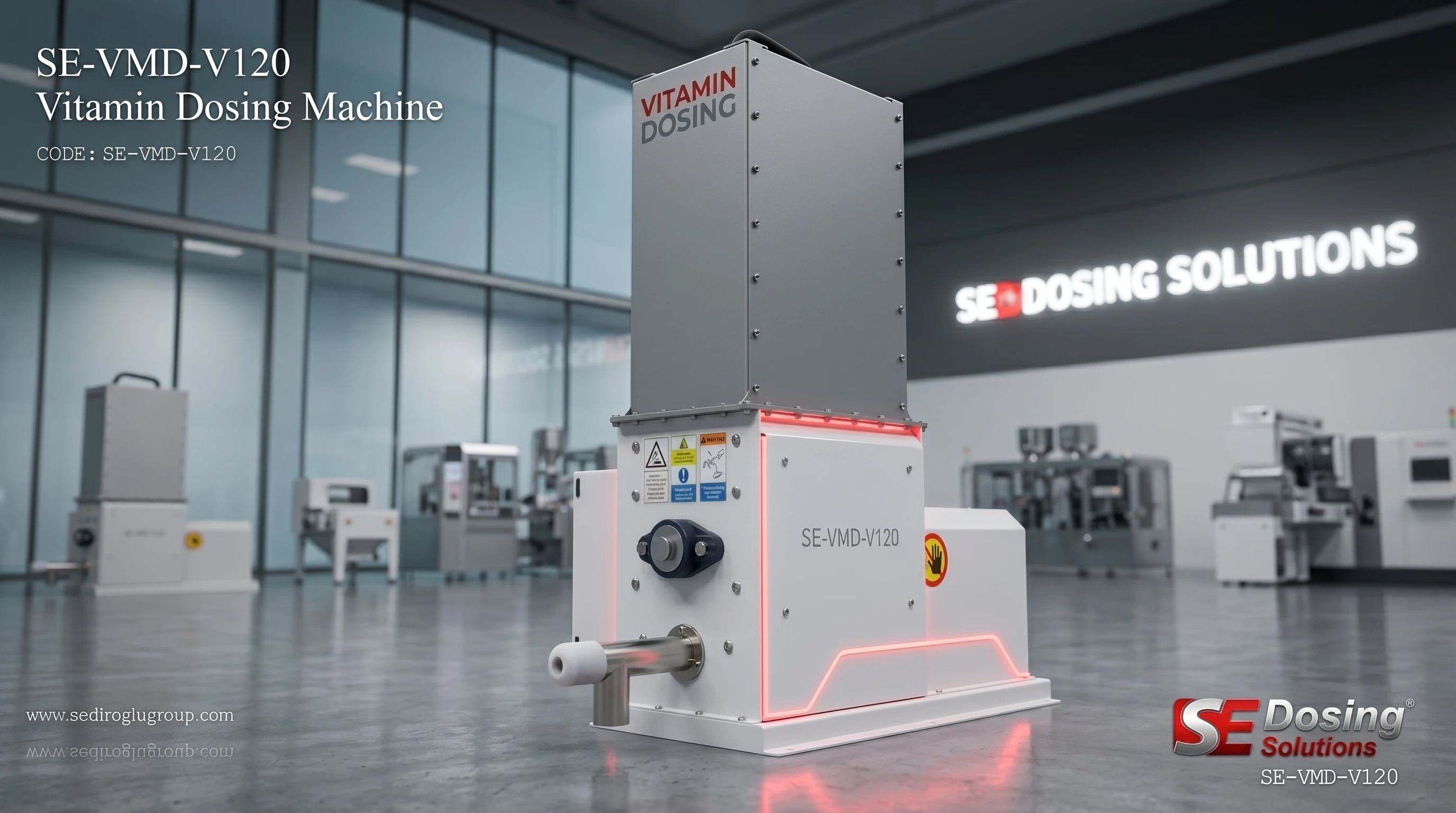
Vitamin Dosing Machine
A Vitamin Dosing Machine is an advanced industrial system designed to accurately dispense and inject vitamins into food, beverages, pharmaceuticals, dietary supplements, and nutritional products. As consumer awareness regarding health and wellness continues to grow, manufacturers are increasingly incorporating vitamins and micronutrients into their products. This trend has significantly increased the demand for precise dosing technologies capable of ensuring consistency, quality, and regulatory compliance.
Vitamin dosing plays a critical role in the production of fortified foods such as milk, juice, cereals, edible oils, infant formula, and nutritional supplements. Since Vitamin D is typically required in very small quantities, even minor deviations in dosage can affect product quality, nutritional value, and legal compliance. A Vitamin Dosing Machine eliminates these risks by delivering highly accurate and repeatable dosing performance.
Modern dosing systems utilize advanced sensors, programmable controllers, precision pumps, and automated monitoring systems to guarantee exact vitamin addition throughout the manufacturing process. These machines are designed to operate continuously in demanding production environments while maintaining exceptional accuracy and efficiency.
What Is a Vitamin Dosing Machine?
A Vitamin Dosing Machine is specialized equipment that measures and dispenses controlled quantities of Vitamin D into a production line. The machine ensures that each batch or product receives the exact amount of vitamin required by formulation specifications.
Vitamin D can be introduced into products in several forms:
-
Liquid concentrates
-
Oil-based solutions
-
Powder formulations
-
Microencapsulated vitamins
-
Water-soluble vitamin blends
The dosing machine is calibrated according to production requirements and automatically adjusts dosage rates based on flow rate, batch size, or product volume.
These machines are commonly used in:
-
Dairy processing plants
-
Beverage manufacturing facilities
-
Pharmaceutical production
-
Nutraceutical manufacturing
-
Infant nutrition production
-
Food fortification facilities
-
Functional food processing
Importance of Accurate Vitamin D Dosing
Accurate vitamin dosing is essential for several reasons.
Product Consistency
Consumers expect every package of a fortified product to contain the same nutritional value. Precise dosing ensures consistency across all production batches.
Regulatory Compliance
Food and pharmaceutical industries must comply with strict regulations governing nutrient content. Incorrect dosing may result in non-compliant products.
Cost Efficiency
Vitamin D ingredients are often expensive. Overdosing increases production costs, while underdosing may lead to product recalls.
Consumer Safety
Excessive vitamin levels may present health concerns, while insufficient levels fail to deliver intended nutritional benefits.
Brand Reputation
Maintaining accurate nutrient content helps manufacturers protect their reputation and maintain customer trust.
How a Vitamin Dosing Machine Works
The operation of a Vitamin Dosing Machine typically involves several stages.
Storage
Vitamin concentrates are stored in dedicated tanks or containers designed to preserve product quality and stability.
Metering
Precision pumps measure the exact amount of vitamin required for the production process.
Injection
The vitamin solution is injected into the product stream at a designated point within the production line.
Mixing
Specialized mixers ensure uniform distribution of Vitamin D throughout the product.
Monitoring
Sensors continuously monitor flow rates and dosing accuracy.
Automation
Programmable Logic Controllers (PLCs) automatically adjust dosing rates based on real-time production conditions.
Main Components of a Vitamin Dosing Machine
A modern Vitamin Dosing Machine consists of several key components.
Storage Tank
The storage tank holds the vitamin concentrate before dosing. Tanks are often made from stainless steel to ensure hygiene and durability.
Dosing Pump
The dosing pump is the heart of the system. It precisely controls the amount of vitamin delivered into the product stream.
Common pump types include:
-
Peristaltic pumps
-
Diaphragm pumps
-
Piston pumps
-
Gear pumps
Flow Meter
Flow meters measure product movement and help synchronize vitamin dosing with production flow.
PLC Control System
The PLC manages all machine functions and allows operators to set dosing parameters.
Human Machine Interface (HMI)
The HMI provides a user-friendly touchscreen interface for monitoring and controlling the system.
Sensors
Various sensors monitor:
-
Pressure
-
Temperature
-
Flow rate
-
Tank level
-
Pump performance
Types of Vitamin Dosing Machines
Different industries require different dosing technologies.
Batch Dosing Machines
Batch dosing systems add vitamins to a fixed quantity of product during batch processing.
Advantages:
-
High flexibility
-
Suitable for multiple formulations
-
Easy recipe management
Applications:
-
Nutritional supplements
-
Pharmaceuticals
-
Specialty food products
Continuous Dosing Machines
Continuous systems add vitamins during uninterrupted production.
Advantages:
-
High productivity
-
Consistent output
-
Reduced labor requirements
Applications:
-
Dairy plants
-
Beverage manufacturing
-
Large-scale food production
Multi-Ingredient Dosing Systems
These advanced systems can dose multiple vitamins and additives simultaneously.
Suitable for:
-
Fortified milk
-
Functional beverages
-
Infant formula
-
Nutritional powders
Applications of Vitamin Dosing Machines
Dairy Industry
Milk fortification is one of the most common applications of Vitamin D dosing technology.
Products include:
-
Milk
-
Yogurt
-
Cheese
-
Cream
-
Dairy beverages
Beverage Industry
Manufacturers fortify beverages to enhance nutritional value.
Examples:
-
Fruit juices
-
Sports drinks
-
Energy beverages
-
Functional drinks
Pharmaceutical Industry
Pharmaceutical manufacturers use dosing systems to produce:
-
Liquid medicines
-
Nutritional formulations
-
Vitamin supplements
Nutraceutical Industry
Nutraceutical companies rely on precise dosing systems to manufacture health supplements and fortified products.
Infant Nutrition
Infant formula requires extremely accurate nutrient dosing to meet strict regulatory standards.
Advantages of Using a Vitamin Dosing Machine
Exceptional Accuracy
Modern systems can achieve dosing accuracies exceeding ±0.5%.
Reduced Human Error
Automation minimizes manual intervention and improves consistency.
Improved Efficiency
Production speeds increase while maintaining product quality.
Lower Operating Costs
Accurate dosing reduces ingredient waste.
Enhanced Traceability
Data logging features provide complete production records.
Regulatory Compliance
Automated documentation supports audits and inspections.
Future Trends in Vitamin Dosing Technology
The future of vitamin dosing technology includes:
-
AI-based process optimization
-
Smart sensors
-
Predictive maintenance
-
Industry 4.0 integration
-
Remote monitoring
-
Cloud-based data management
-
Advanced traceability systems
As food fortification programs expand globally, demand for sophisticated vitamin dosing solutions is expected to increase significantly.
Frequently Asked Questions (FAQ)
1. What is a Vitamin Dosing Machine used for?
A Vitamin Dosing Machine is used to accurately add Vitamin D to food products, beverages, pharmaceuticals, and nutritional supplements during manufacturing.
2. Why is precise vitamin dosing important?
Precise dosing ensures product consistency, regulatory compliance, consumer safety, and cost efficiency while preventing under- or overdosing.
3. Which industries use Vitamin Dosing Machines?
These machines are widely used in dairy processing, beverage production, pharmaceutical manufacturing, nutraceutical production, and infant nutrition industries.
4. Can a Vitamin Dosing Machine handle other vitamins?
Yes. Many systems can dose multiple vitamins and micronutrients, including Vitamins A, E, K, B-complex vitamins, minerals, and other additives.
5. What are the main benefits of automated vitamin dosing?
Benefits include improved accuracy, reduced waste, enhanced productivity, lower labor costs, better traceability, and easier regulatory compliance.
6. How accurate are modern Vitamin Dosing Machines?
Most modern systems achieve dosing accuracies between ±0.5% and ±1%, depending on machine design and application requirements.
7. Are Vitamin Dosing Machines suitable for pharmaceutical applications?
Yes. Pharmaceutical-grade dosing systems are specifically designed to meet strict GMP and regulatory requirements.
8. What maintenance is required?
Regular maintenance includes pump inspection, sensor calibration, cleaning procedures, software updates, and routine system verification.
9. Can these machines be integrated into existing production lines?
Yes. Most manufacturers offer customizable solutions that can be integrated into existing production environments.
10. What factors should be considered when selecting a Vitamin Dosing Machine?
Key considerations include dosing accuracy, production capacity, automation level, compatibility with vitamin formulations, maintenance requirements, and regulatory compliance standards. For more detailed information, you can visit the product page or follow us on facebook to stay updated with our latest products, innovations, and industry news.
Blog Latest Posts
Stone Mill
Wheat Scouring Technology for Modern Flour Mills