- Sediroglu Group
- 24 June 2026
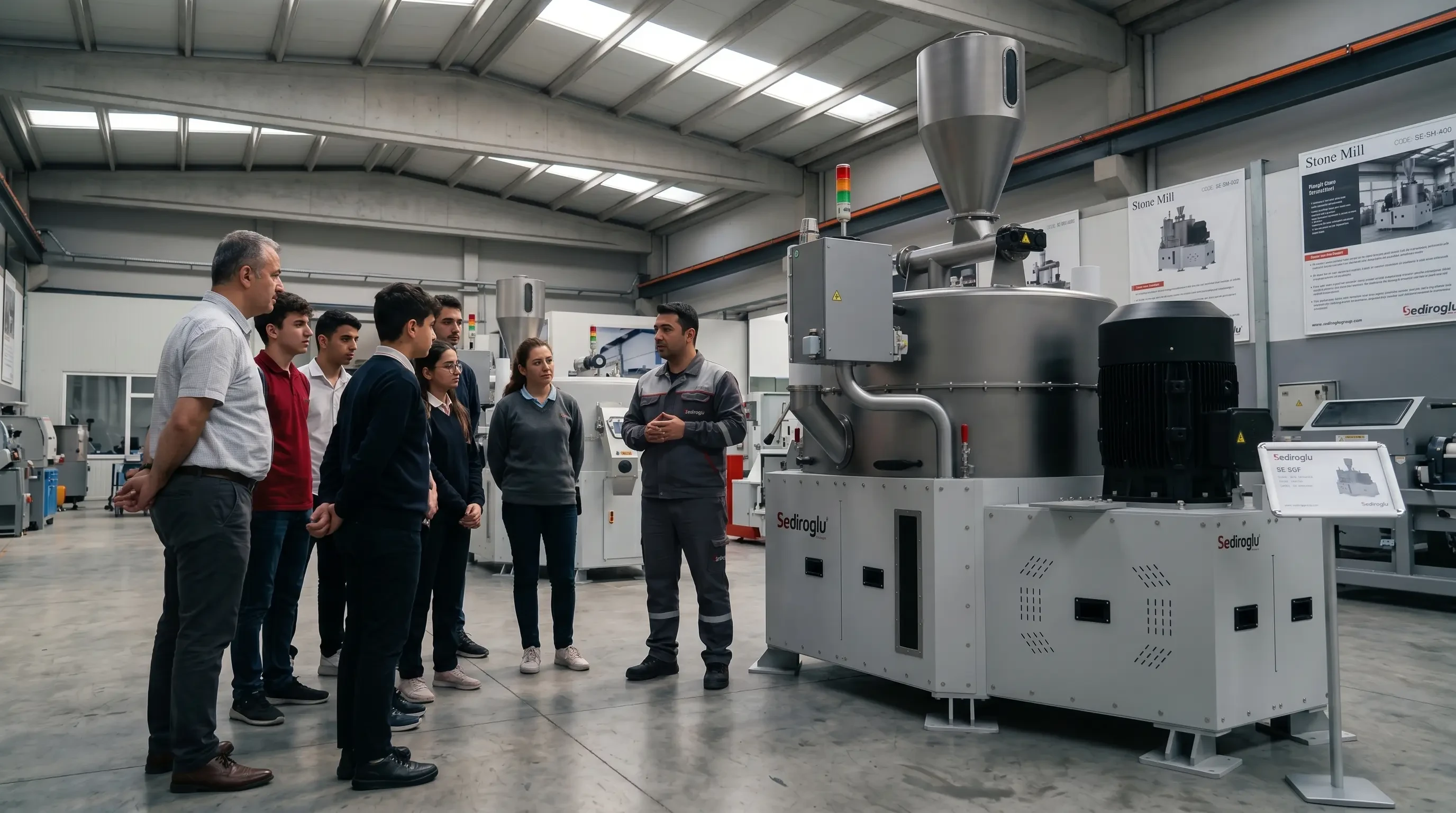
Stone Mill
Stone milling technology represents one of the oldest yet most enduring food processing methods in human history. Despite the rapid industrialization of food production systems and the widespread adoption of high-speed roller mills and steel-based grinding machines, stone mills continue to hold a significant place in both artisanal and industrial food sectors.
The reason for this continued relevance lies in the fundamental advantages of stone grinding: low-temperature processing, minimal nutrient loss, natural texture preservation, and chemical-free production. In an era where consumers are increasingly concerned about food quality, transparency, and nutritional integrity, stone mills offer a compelling alternative to conventional high-speed grinding systems.
Modern stone mills are no longer limited to traditional manual systems. Today, they are engineered with advanced materials, precision machining, electric motors, automated feeding systems, and digital monitoring technologies. This combination of ancient principles and modern engineering allows stone mills to serve both small-scale organic producers and large industrial food manufacturers.
This comprehensive guide explores stone mills in extreme detail, including their mechanical structure, engineering principles, material science, industrial applications, efficiency comparisons, maintenance requirements, and future technological developments.
What is a Stone Mill?
A stone mill is a mechanical grinding system that uses two circular grinding stones to reduce grains, seeds, legumes, coffee beans, and spices into flour, powder, or paste. The grinding process occurs through compression and friction rather than cutting or impact, which is the case in steel blade grinders.
The defining characteristic of a stone mill is its low rotational speed. This slow operation ensures that heat generation remains minimal throughout the grinding process. Heat is one of the primary causes of nutrient degradation in food processing, particularly for heat-sensitive vitamins, natural oils, and volatile aromatic compounds.
Stone mills are widely regarded as “cold milling systems” because they preserve the biochemical integrity of the raw material. This makes them especially valuable in organic food production, nutritional supplement manufacturing, and premium flour production.
From an engineering perspective, stone mills operate on a simple but highly effective mechanical principle: controlled abrasion between two mineral surfaces with precisely engineered friction patterns.
Historical Development of Stone Milling Technology
The origins of stone milling date back to prehistoric times when early humans discovered that grinding grains between two stones produced a more digestible and usable form of food. The earliest forms of stone mills were simple hand-operated devices known as saddle stones.
Over time, civilizations such as the Egyptians, Greeks, and Romans developed more advanced rotary quern stones. These systems allowed continuous grinding with improved efficiency and reduced manual effort.
During the Middle Ages, water-powered and wind-powered stone mills became widespread across Europe and Asia. These systems represented a major technological advancement, allowing large-scale grain processing for growing populations.
With the Industrial Revolution, roller mills gradually replaced stone mills in mass production due to their higher speed and efficiency. However, stone mills never disappeared entirely. Instead, they transitioned into specialized roles where quality and nutritional preservation were more important than speed.
Today, stone milling has experienced a renaissance driven by consumer demand for organic, whole-grain, and minimally processed foods.
Mechanical Working Principle of Stone Mills
The operation of a stone mill is based on a combination of rotational mechanics, surface friction, and gravitational feed control.
At the core of the system are two circular grinding stones. The lower stone remains fixed, while the upper stone rotates at a controlled speed. Raw material enters the center of the stones through a hopper and gradually moves outward due to centrifugal force and grinding pressure.
As the material passes between the stones, it is subjected to compressive force and abrasive friction. This dual action breaks down the grain structure into progressively smaller particles.
The grinding surfaces of the stones are carefully engineered with radial grooves. These grooves serve several critical functions:
-
Regulating the flow of material
-
Controlling particle size distribution
-
Preventing overheating
-
Enhancing grinding efficiency
-
Ensuring uniform output
The depth, angle, and spacing of these grooves can be adjusted depending on the desired fineness of the final product.
Engineering Design and Material Science
Stone mills rely heavily on material selection and precision engineering. The most commonly used materials include natural granite, basalt, and engineered composite stones.
Granite is widely preferred due to its hardness, durability, and natural abrasive properties. Basalt stones offer superior grinding efficiency and are often used in high-performance industrial systems. Composite stones combine natural minerals with synthetic binders to improve consistency and lifespan.
In modern stone mill design, the alignment of the grinding stones is critical. Even minor misalignment can lead to uneven grinding, excessive wear, and reduced efficiency. Therefore, precision calibration systems are used to maintain optimal spacing between the stones.
Temperature control is another key engineering factor. Although stone mills naturally operate at low temperatures, industrial systems may include ventilation and cooling mechanisms to further stabilize thermal conditions during continuous operation.
Types of Stone Mills in Modern Industry
Stone mills can be categorized into several types based on their power source, capacity, and application.
Traditional manual stone mills are the simplest form, relying on human force to rotate the grinding stone. These systems are still used in rural and artisanal production environments.
Electric stone mills represent the most common modern configuration. These systems use electric motors to maintain consistent rotational speed and grinding pressure. They are widely used in small to medium-scale food production facilities.
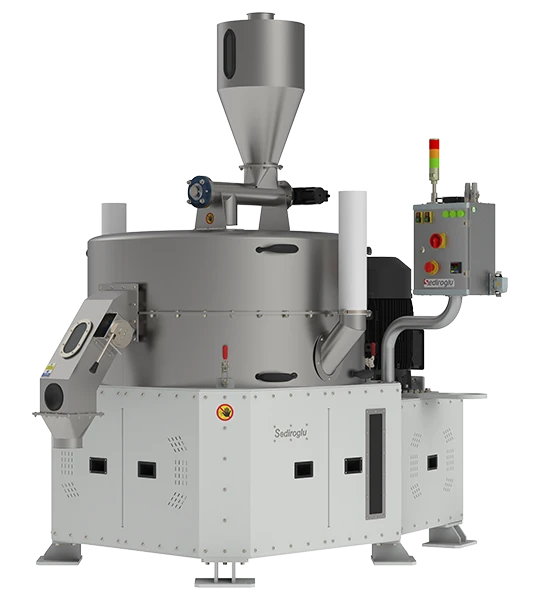
Industrial stone mills are high-capacity machines designed for continuous operation. They often include automated feeding systems, cooling mechanisms, and digital control panels for precision adjustment.
Hybrid systems are an emerging category that combines stone grinding technology with modern roller milling techniques. These systems aim to balance efficiency and quality.
Advantages of Stone Milling Technology
One of the most important advantages of stone milling is its ability to preserve nutritional integrity. Because the process generates minimal heat, heat-sensitive compounds such as vitamins, enzymes, and essential fatty acids remain intact.
Another significant advantage is flavor preservation. Stone-ground products retain their natural aroma and taste because volatile compounds are not destroyed during processing.
Stone milling also supports clean-label production. Since no chemical additives or processing aids are required, the resulting products are considered more natural and transparent.
From an environmental perspective, stone mills consume significantly less energy compared to high-speed industrial grinders. This makes them a more sustainable option for eco-conscious manufacturers.
Additionally, stone-ground flour typically contains more fiber because the bran and germ are not separated during processing.
Limitations and Operational Challenges
Despite their advantages, stone mills also have certain limitations. The most notable is lower production speed. Because the grinding process is intentionally slow, output rates are lower compared to industrial roller mills.
Maintenance is another important consideration. Grinding stones gradually wear down and require periodic dressing to maintain efficiency. This process involves reshaping the stone surface to restore optimal grinding performance.
Initial investment costs for industrial stone mills can also be relatively high, especially for advanced automated systems.
Industrial Applications
Stone mills are widely used across multiple industries.
In the food industry, they are used for flour production, cereal processing, and specialty grain products.
In the organic food sector, stone mills are essential for producing certified organic flour and whole grain products.
The spice industry uses stone milling to preserve volatile oils and aromatic compounds in spices such as pepper, cumin, and coriander.
In the coffee industry, stone mills are used for controlled grinding that preserves aroma and flavor consistency.
Nutritional supplement manufacturers also use stone mills to produce powdered health ingredients.
Maintenance and Operational Best Practices
Proper maintenance is essential for ensuring long-term efficiency. Regular cleaning prevents contamination and ensures food safety standards are met.
Stone dressing should be performed periodically depending on production volume. This process restores the sharpness of the grinding surfaces.
Mechanical components such as motors, bearings, and feed systems must be inspected regularly in electric and industrial models.
Lubrication of moving parts ensures smooth operation and reduces wear.
Future of Stone Milling Technology
The future of stone milling lies in the integration of traditional grinding principles with modern digital technologies.
Automation systems are increasingly being integrated into stone mills, allowing precise control of feed rates, grinding speed, and output consistency.
Energy efficiency improvements are also a major focus, with manufacturers developing low-power motors and optimized grinding geometries.
Hybrid systems that combine stone and roller milling technologies are gaining attention for their ability to balance quality and efficiency.
Smart monitoring systems using IoT technology are expected to become standard, allowing remote monitoring of performance, temperature, and wear levels.
Frequently Asked Questions (FAQ)
Stone mills are used for grinding grains, seeds, and spices into flour or powder while preserving natural nutrients and flavor.
Stone-ground flour is generally considered healthier because it retains fiber, vitamins, and natural oils that are often lost in high-speed milling.
Stone mills operate at low speeds and therefore generate minimal heat during the grinding process.
Yes, stone mills are widely used for grinding spices while preserving their aromatic properties.
Industrial stone mills are designed for continuous high-capacity production and are widely used in food manufacturing facilities.
Common materials include granite, basalt, and engineered composite stones.
Regular cleaning should be performed daily, while stone dressing depends on usage intensity.
The main advantage is the preservation of natural nutrients, flavor, and texture compared to high-speed grinding systems.
Yes, modern stone mills can be fully automated with sensors, digital controls, and automated feeding systems.
Yes, they are highly eco-friendly due to lower energy consumption and minimal processing waste.
Conclusion
Stone mills represent a unique intersection of ancient tradition and modern engineering. Their ability to preserve nutritional value, maintain natural flavor, and support clean-label production makes them highly relevant in today’s food industry.
While they may not match the speed of modern roller mills, their superiority in quality, sustainability, and product integrity ensures their continued use across multiple industries. As technology advances, stone milling systems are expected to become even more efficient, automated, and widely adopted. For more detailed information, you can visit the product page or follow us on facebook to stay updated with our latest products, innovations,
Blog Latest Posts

Flour Mill Grinder

Mill Grains | Grain Milling Machines & Processing Solutions